
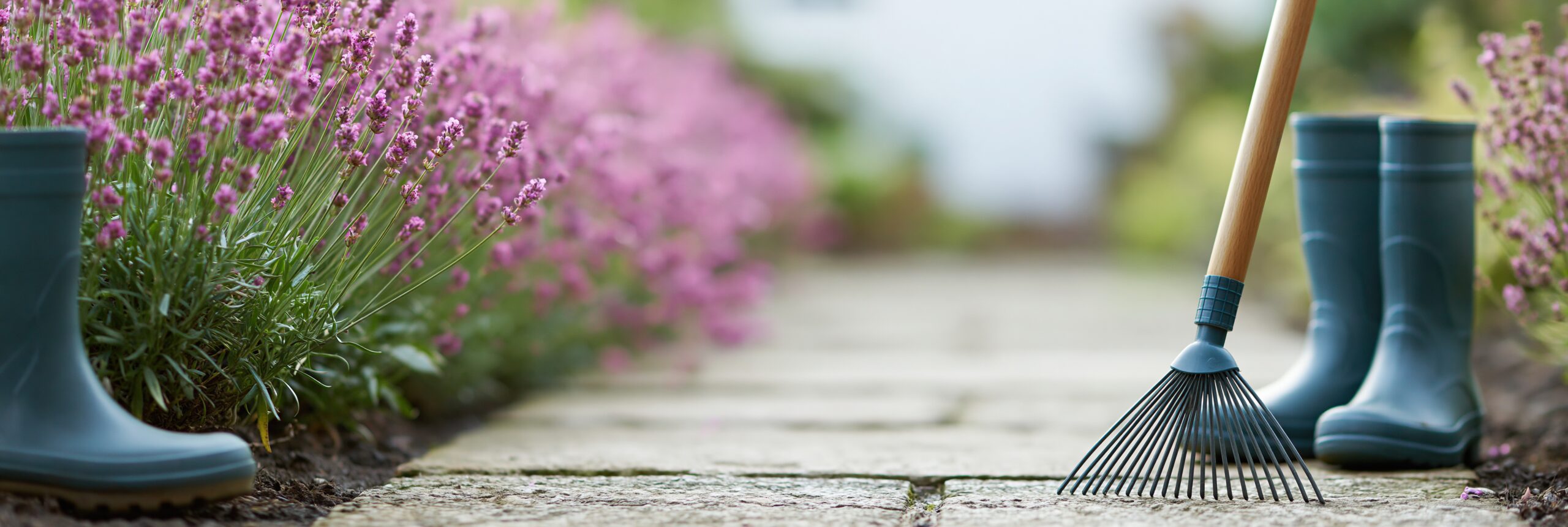
By late summer, even the most carefully maintained yard can look a little tired. Lawns lose some of their enthusiasm, flowering plants seem to be unable to keep up with the growing obsession with pumpkin spice everything, and everyone’s busy with back-to-school activities/traffic.
With the kids back in school and summer vacations a mere memory, August is a great time to give your yard some attention, correct small problems, and prepare plants for the transition into fall, and the rainy season beyond.
Check Your Irrigation
When plants begin to droop or develop brown edges, the natural response is often to water more. But the problem may not be the amount of water but how the water is being delivered.
Turn on each irrigation zone and watch it operate. Look for clogged sprinkler heads, broken lines, overspray onto sidewalks, and areas where water is pooling or running into the street.
Drip irrigation lines can become disconnected or blocked, leaving one plant thirsty while another gets far more water than it needs. If your irrigation runs early in the morning or while you’re at work, you may not be aware of issues.
Watering Tips
- Water like you nap. Watering slowly and deeply encourages roots to grow farther into the soil, where moisture remains available longer. When hand watering, many people treat it as a hydration race—wet the soil and get finished as soon as possible. But frequent, quick watering can keep water near the surface and that creates a shallow root system because the roots go where the water is. That makes plants more vulnerable to heat and dry conditions, as well as toppling.
- Water early. Watering during the cooler part of the morning reduces evaporation while allowing leaves and soil surfaces to dry during the day.
- Change it up. Adjust irrigation as temperatures change rather than relying on the same schedule all season.
Alameda County isn’t currently experiencing drought conditions, and East Bay Municipal Utility District reports that regional water supplies are sufficient for this year. Still, avoiding water waste helps protect a shared resource and may lower your bill. Plus, it’s always good practice for future droughts.
Refresh Mulch, but Give Plants Room
A layer of mulch helps soil retain moisture, moderates soil temperature, and discourages weeds. (Note we said discourages, not much eliminates them but we can try, right?) By August, mulch applied earlier in the year likely has shifted or become thin in heavily exposed areas.
Add mulch where soil is bare, but avoid piling it against tree trunks, plant stems, fences, or building foundations. Excess mulch around a trunk can trap moisture and contribute to rot, while mulch against a structure may create an inviting hiding place for pests.
Before adding more, gently loosen compacted mulch so water can reach the soil instead of running across the surface.
Prune Selectively
Late summer is a good time to remove dead flowers, broken branches, and clearly damaged growth. Light trimming can improve a plant’s appearance and help maintain clearance around walkways, windows, and outdoor lighting.
Avoid aggressive pruning during hot or dry weather. Heavy cutting can expose previously shaded branches and leaves to direct sun, increasing plant stress.
Major pruning is usually better timed according to the particular tree or shrub and its growth cycle. Some need old growth to produce next year and lopping it off may mean fewer flowers, while others need the pruning to be able to produce more vigorously in the spring. If you’re not sure about the needs of your specific plants, check online.
When trimming trees, consider whether the work is safely within reach. Large limbs, branches near power lines, and trees showing signs of disease should be evaluated by a qualified professional.
Watch for Pests and Plant Stress
Take a slow walk around your yard and look closely at leaves, stems, and soil. Yellowing, curling, spots, webbing, holes, or sticky residue can indicate pests, disease, watering problems, or nutrient deficiencies.
Check the undersides of leaves, where many insects prefer to hide. Early detection may allow you to remove affected leaves, wash away pests, or use a targeted treatment before the problem spreads.
Also inspect plants near pavement, walls, and reflective surfaces. These areas can become warmer than the surrounding yard, causing plants to dry out more quickly.
Plan Ahead for Fall
Late summer is an excellent time to identify plants that struggled and consider better options for the future. California native and climate-adapted plants can offer color and habitat while requiring less water once established.
Fall is a great time to plant because cooler temperatures and seasonal rain give new plants time to develop stronger roots before the following summer. Now is the ideal time to begin planning fall planting projects. Before making landscaping changes, review our neighborhood’s architectural standards and obtain any required approval.
A little attention now can help your landscape finish summer well and enter fall ready for its next season. It can also mean saving a little money by helping your plants transition to the next season without needing a replacement.
continue reading
Related Posts
Before you get excited about your next home improvement—a new kitchen, a better driveway, a snazzy new roof, or maybe the outdoor space you’ve been imagining for years—know that while you’re getting a new space, your neighbors, however, get the noise, the trucks, and the dust. They’re also undoubtedly asking the daily question of “How long is this going to last?” That doesn’t mean you shouldn’t improve your home. Strong neighborhoods are made up of people who take care of their properties, invest in their homes, and keep the community looking good. But a little thoughtfulness before the work begins can make a big difference in how your project is perceived by the people around you. Plus, with many people

A practical, hyperlocal playbook for Harbor Bay residents In Alameda, home value isn’t just about square footage and comps. It’s about how well a home weathers foggy mornings, salty air, and winter rain. It’s also about the neighborhood. When a community stays cohesive and cared for, every homeowner benefits.